 Service illustration · not a completed customer project
THE WORK, EXPLAINED
Start with the condition.
Understand the scope.
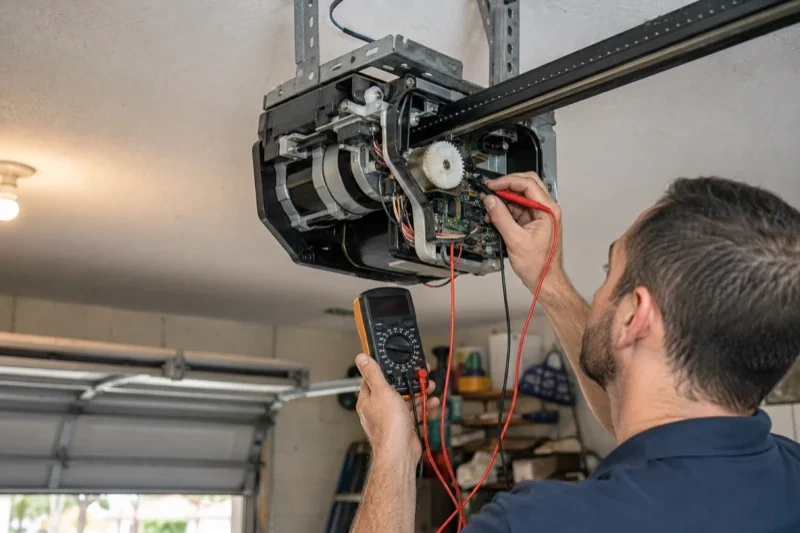
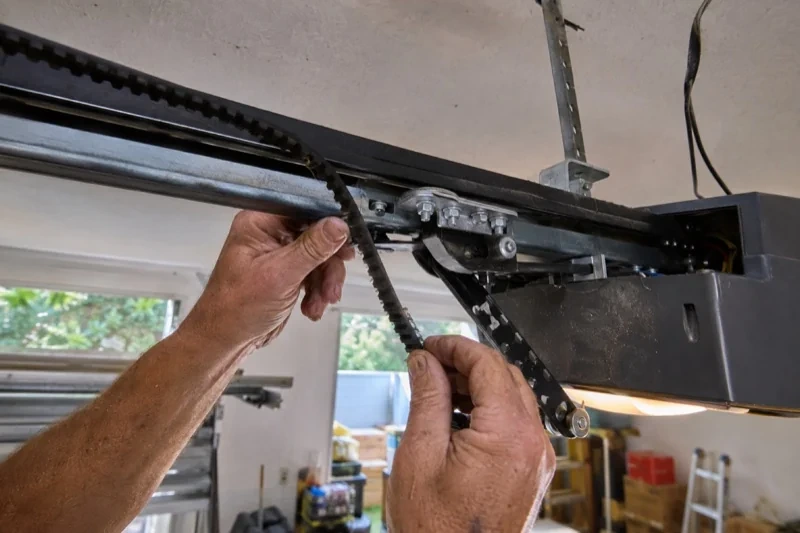
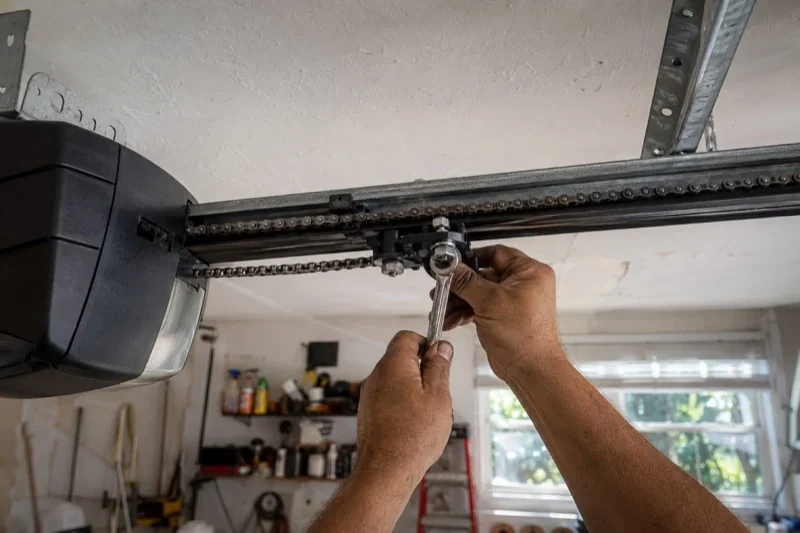
Provide the opener identification and describe the chain noise or movement observed. Ask which chain, sprocket, trolley or rail findings support the proposed repair, whether door-related resistance was assessed and which completion checks are included.
What may be involved
- chain
- sprocket
- trolley
- rail hardware
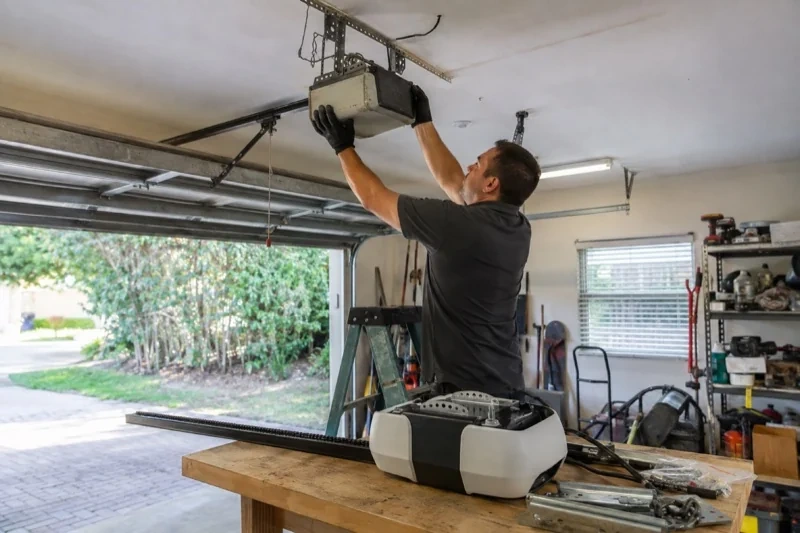
Ask the provider to distinguish existing parts to inspect, proposed replacements, and tools, materials or reports included in the service. Confirm the work and exclusions after assessment; this list does not mean that every item will be supplied or replaced.
LOCAL RESEARCH / Burlingame
Building history
Burlingame incorporated in 1908 as Peninsula communities expanded with more affordable commuting.
Source ↗Local context
Automatic residential garage door openers sold in the United States have been subject to federal entrapment protection rules for decades. The Consumer Product Safety Commission's notice on the final rules describes an external entrapment protection device, such as an electric eye that detects an object obstructing the door without touching it, or a door edge sensor, and applies additional entrapment protection requirements to openers manufactured on or after 1 January 1993. If an opener is being diagnosed or replaced, ask how the safety reversal and the sensors will be tested afterwards. This is background, not an assessment of your equipment.
Source ↗Area-wide context does not establish the condition of your property or equipment.
Before the visit
If the door is crooked, off track or has a broken spring, keep clear and stop operating it.